Human Services
Community Studies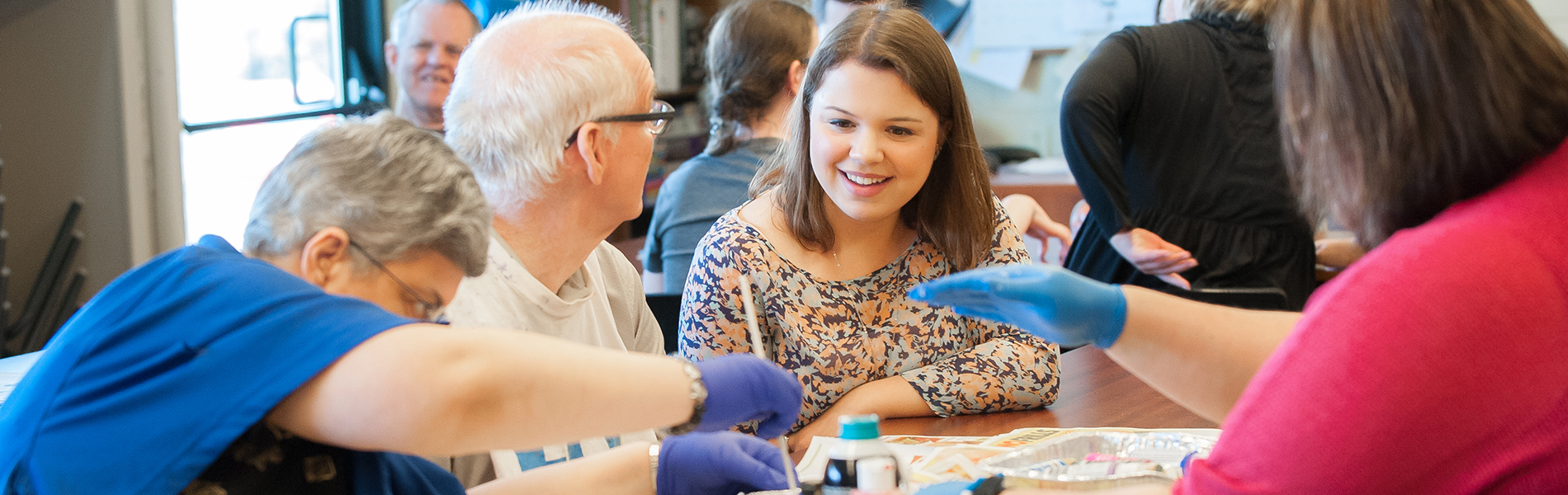
In the Human Services program, you will develop the knowledge, skills, and practical experience needed to support individuals in achieving meaningful and self-directed lives.
The program has a strong foundation in supporting people with intellectual and developmental disabilities while also preparing students to work with individuals who have a wide range of strengths, abilities, and support needs across the lifespan.
September 2026
Prince of Wales Campus
Program Length
2 Years
Credential
DIPLOMA, HUMAN SERVICES
Canadian Tuition
International Tuition
Canadian Applicants
Waiting list
International Applicants with a Valid Study Permit
Waiting list
Other International Applicants
Waiting list
September 2026
West Prince Campus
Program Length
2 Years
Credential
Diploma, Human Services
Canadian Tuition
International Tuition
Canadian Applicants
Accepting Applications
International Applicants with a Valid Study Permit
Waiting list
Other International Applicants
Waiting list
Notes:
This program has degree pathways, giving you the opportunity to receive credit for your Holland College diploma when you continue your education. For a complete list of agreements, visit the Degree Pathways page.
| Partner Institution | Credential | Details of Agreement |
|---|---|---|
| Griffith | Bachelor of Social Work | Graduates may complete a Bachelor of Social Work degree in two and a half years. |
| University of New Brunswick - Saint John | Bachelor of Applied Management | Graduates with a 70% average receive two years of credit toward a Bachelor of Applied Management degree. |
| University of Prince Edward Island | Bachelor of Arts | Graduates with a 70% average receive up to 60 hours of credit toward a Bachelor of Arts degree. |
Course Code:SAFE-1005
An overview of the Occupational Health and Safety Act of Prince Edward Island. Students examine the legislation, how PEI employees are protected while on the job and the responsibilities of employees and employers.
Credit Value:0
Course Code:COMM-1120
Explore verbal, non-verbal, and written communication knowledge, skills, and strategies. Students investigate communication techniques, issues of responsibility and accountability. Students explore a variety of communication strategies with individuals, families, and other professionals in the educational, residential, and vocational Human Services sectors. Students explore their own assessment of personal professional practices in the field of Human Services.
Credit Value:3
Course Code:COUN-1030
An introduction to counselling techniques for working with people with exceptionalities. Students utilize a conceptual framework and gain strategies for effective helping. Enhance confidence in social and emotional skills and explore personal limitations as a helper. Establish an effective helping environment and apply basic counselling techniques. Students acquire an awareness of the importance of self-care strategies and stress management.
Credit Value:4
Course Code:COUN-2030
Students learn and implement strategies to support holistic growth. Students develop basic counselling skills and explore various counselling modalities. Students gain insights into recognizing signs of self-destructive behaviors. Students reflect on their role as a helper. Grief and loss, and working with diverse family structures is explored.
Credit Value:4
Course Code:EDUC-2230
Gain a comprehensive foundation for working with people with exceptionalities to enhance their skill development, maintenance, and acquisition. Students gain the necessary knowledge and skills to effectively support skill development in people with exceptionalities. Students learn to implement individualized and group approaches to facilitating skill development across the lifespan. The theoretical frameworks underlying skill development and evidence-based practices are explored.
Credit Value:5
Course Code:HSER-1000
A foundational course and overview of supporting health of individuals in a person-centered manner. Students explore their role in supporting individuals to reach optimal health and well-being.
Credit Value:3
Course Code:HSER-1040
Explore how to support people with exceptionalities by focusing on their strengths, choices, and goals. Students learn how to use assessments, create goal plans, and understand the importance of personal preferences. Students also explore how a worker's values and the role of the family can shape the planning process. Students gain practical skills to help people live more meaningful lives.
Credit Value:3
Course Code:HSER-1050
A foundational understanding of human behaviour and the principles of behavioural support is explored. Using an inquiry-based approach, students examine positive behaviour interventions and support strategies within person-centered and trauma-informed frameworks. Emphasis is placed on the use of motivational techniques such as reinforcement and preventative strategies, along with ethical and professional considerations in behavioural practice. Through interactive learning and real-world applications, students build essential skills for supporting individuals in diverse settings.
Credit Value:3
Course Code:HSER-1100
An introduction to exceptionalities, including intellectual and physical disabilities. Through exploration of neurological structures and functions, historical definitions, diagnostic criteria, classification systems, and available supports and interventions, students develop the knowledge and skills necessary to discuss the needs of people with exceptionalities.
Credit Value:3
Course Code:HSER-1200
An introduction to exceptionalities, including neurodevelopmental and neurocognitive disorders. Students explore the classification system, psychiatric terms, and various diagnoses, needed to understand various neurological disorders, and to develop the knowledge necessary to discuss the needs of individuals with these diagnoses.
Credit Value:3
Course Code:HSER-2000
A fundamental exploration of inclusive practices, the principle of normalization and social role valorization (SRV). Students examine measures and practices that provide individuals with exceptionalities a wide variety of opportunities for inclusion, valued roles in society, and lives lived with dignity.
Credit Value:3
Course Code:HSER-2050
Explore collaborative approaches to Positive Behaviour Intervention and Support, emphasizing the importance of teamwork in addressing behavioural challenges. Students examine a range of proactive and responsive strategies to reduce risk behaviours and promote positive outcomes. Through group work and applied learning, students gain hands-on experience in developing sample behaviour support plans. The course fosters critical thinking, communication, and ethical decision-making in behavioural support contexts.
Credit Value:3
Course Code:HSER-2200
An introductory overview of basic medication principles and guidelines to follow when administering medications. Students identify different types, purposes, side effects and potential interactions of a variety of medications.
Credit Value:2
Course Code:NCPR-1006
Students attain skills on how to prevent a potential crisis from occuring and how to intervene in a crisis situation. Students are introduced to and practice physical skills to use when managing disruptive behaviours.
Credit Value:0
Course Code:NCPR-1010
This course is an injury prevention program designed to promote healthy lifestyles and safe work practices for anyone associated with moving people and/or objects. Its purpose is to improve how individuals prepare for and accomplish their work and decreases the frequency and severity of lost time related to musculoskeletal injuries.
Credit Value:0
Course Code:PRAC-1005
Students display the fundamental ethics and values of a Human Services professional. Students develop communication skills, provide personal care, practice documentation, explore behavior support plans, and exhibit employability skills. Students participate in the daily responsibilities of a Human Services professional at the site under the guidance of a supervisor.
Credit Value:6
Course Code:PRAC-2030
Students exhibit the fundamental ethics and values of a Human Services professional. Students display effective communication and documentation skills. Students develop relationships, implement behavior support plans, perform personal care, and display employability skills. Students perform the daily responsibilities of a Human Services professional at the site under minimal guidance of a supervisor.
Credit Value:6
Course Code:PRAC-3005
Students employ the fundamental ethics and values of a Human Services professional. Students utilize effective communication skills, exhibit accurate documentation techniques and display appropriate employability skills. Students perform personal care, practice teaching, with individuals and groups, and promote inclusionary practices. Students collaborate with colleagues and implement behavior support plans. Students execute the daily responsibilities of a Human Services professional at the site independently without supervision.
Credit Value:6
Course Code:PROF-1205
An exploration of ethical practice and legislation by utilizing a framework when ethical decisions are presented. Students examine attitudes, beliefs and philosophies, and legislation related to working with people with exceptionalities.
Credit Value:3
Course Code:PSYC-1021
Students explore physical, cognitive, social, and emotional developmental milestones that an individual experiences as they move through the life span.
Credit Value:2
Upon successful completion of the program, graduates will be able to:
Through classroom learning and community-based practicum experiences, you will gain the knowledge and confidence to support individuals in educational, residential, and vocational settings. Established in 1974, the Human Services program continues to prepare skilled and compassionate professionals who contribute to creating more inclusive and supportive communities.
Since its beginning, graduates have been in demand, and have contributed to the enhancement of services for people with disabilities but and for many people who are marginalized in society.
The program continues to be highly valued in P.E.I. and throughout the Maritime region. It consistently addresses new and emerging trends in the field of disabilities.
Holland College and Collège de l’Île have partnered to offer select common courses in English or French in this program. The following courses may be offered in French this year: PSYC-1015 Mental Illness, HSER-2010 Working with families.
This program is offered at our Prince of Wales Campus in Charlottetown and also at the West Prince Campus in Alberton.

The instructors are all amazing and give a good mix between teaching and having fun, but also still maintaining a positive/professional attitude in the class! My experience has been wonderful so far and [I] can’t wait for Year 2!!!
First Year Student Survey Respondent, Class of 2025