Primary Care Paramedicine
Health Studies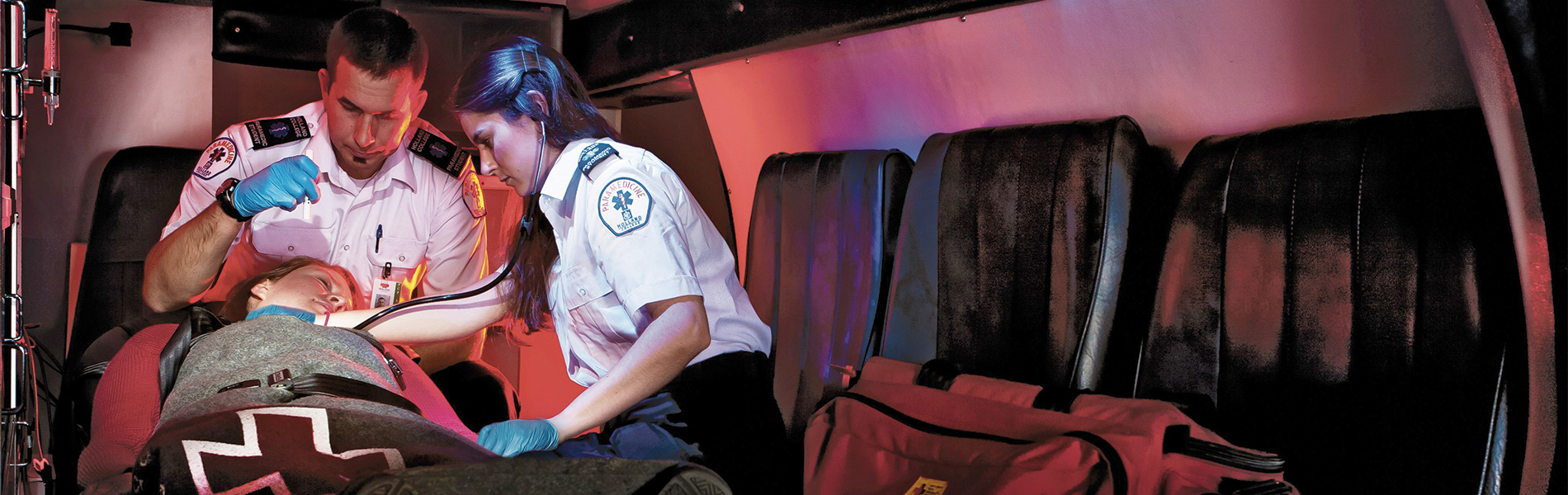
The Primary Care Paramedicine program will prepare you to be an integral part of the health care team working in the field of pre-hospital care.
Upon completion of this program, you will understand human anatomy, physiology, and pathophysiology as it relates to medical and traumatic emergencies. You will also be able to perform a complete patient assessment including a physical examination and history taking, identifying and performing appropriate life support procedures, and communicating effectively using oral and written methods for documenting patient care.
This site is protected by reCAPTCHA and the Google Privacy Policy and Terms of Service apply.
Thank you for reaching out!
Your information has been submitted successfully. A member of our team will be in touch with you soon.
September 2027
Prince of Wales Campus
Program Length
2 Years
Credential
Diploma, Primary Care Paramedicine
Canadian Tuition
International Tuition
Canadian Applicants
Accepting Applications
International Applicants with a Valid Study Permit
Accepting Applications
Other International Applicants
Accepting Applications
Notes:
Don’t have the courses you need to get into this program? Visit our Academic Upgrading section to learn how to upgrade high school credits or get your high school equivalency credential (CAEC).
This program has degree pathways, giving you the opportunity to receive credit for your Holland College diploma when you continue your education. For a complete list of agreements, visit the Degree Pathways page.
| Partner Institution | Credential | Details of Agreement |
|---|---|---|
| University of Prince Edward Island | Bachelor of Applied Health in Paramedicine | Graduates with a 70% average receive 60 hours of credit toward a Bachelor of Applied Health in Paramedicine degree. |
SAFE-1005
An overview of the Occupational Health and Safety Act...
0
ANAT-1000
An introduction to the structure and function of the body in its normal, healthy state. It serves as the basis for understanding pathophysiology and altered body states caused by illness. Students examine individual body organ systems, their components and processes, and how they interrelate.
3.00
COMM-1050
Addresses various aspects of oral and written communication. Students develop stronger listening skills, recognize non-verbal messages, and examine impacts of non-verbal behavior. In a collaborative learning environment, topics on sensitivity and approaches to conversation are explored.
2.00
HLTH-1100
Students learn and practice the concepts of wellness, active living, and fitness to develop a healthy lifestyle in preparation for the physically and mentally demanding work in the paramedic field. Achieving and maintaining physical fitness, improving nutrition and managing the effects of shift work and stress are addressed. This course aids in preparation for the Paramedic Physical Abilities Test.
2.00
HLTH-2100
Students continue to practice the concepts of wellness, active living, and fitness learned in HLTH-1100. Through practical experience and self-evaluation, students will address wellness, physical fitness, back health and the importance of achieving a level of fitness to meet the vigorous demands on the job. Students will develop strategies to plan, design and implement an effective personal fitness program to meet the physical testing requirements and lift requirements for paramedics. This course aids in preparation for the Paramedic Physical Abilities Test.
2.00
NCPR-1045
Paramedicine is a physically demanding profession, and physical fitness underlies the paramedic's ability to perform many job tasks. Successful completion of the Paramedic Physical Abilities Test (PPAT) is required for participation in the practicum course(s) in the Paramedicine program at Holland College. This assessment is also a current requirement for employment in most Atlantic province's EMS services. PPAT certification expires after six months and may need to be passed more than once throughout the program.
0.00
NCPR-1046
Paramedicine is a physically demanding profession, and physical fitness underlies the Paramedic's ability to perform many job tasks. Successful completion of the Paramedic Physical Abilities Test (PPAT) is required for participation in the practicum course(s) in the Paramedicine program at Holland College. This assessment is also a current requirement for employment in most Atlantic province's EMS services. PPAT certification expires after six months and may need to be passed more than once throughout the program.
0.00
NCPR-1080
The goal of the Pediatric Emergency Assessment Recognition and Stabilization (PEARS) course is to improve outcomes of pediatric patients by preparing healthcare providers with techniques in assessment, early recognition, prompt communication, and initial intervention in young patients with respiratory emergencies, shock, and cardiopulmonary arrest. This skill-based course relies on high-performance team dynamics.
0.00
NCPR-1108
An introduction to the kinematics of trauma, traumatic pathophysiology, and related diagnostics and therapeutics for these injuries. Students gain pre-hospital assessment and management techniques.
0.00
NCPR-2045
Students will learn to maneuver an ambulance in various situations, including reversing, serpentine driving, judging spatial distance and communicating with other squad members. They will also learn to operate various systems within the vehicle.
0.00
PARA-1000
An overview of various topics related to Health Systems Design and Delivery and professional responsibility for Paramedics. In addition, the course addresses the structure of the Canadian legal system and legal issues related to the delivery of pre-hospital care, interacting with special population groups and an introduction to medical literature and research.
3.00
PARA-1010
Provides the knowledge to support competencies in performing thorough and concise patient assessment, integrated with communication skills, and building a foundation for pre-hospital care. Students are introducted to the skills related to vital signs, airway management, ECG monitoring, Basic Cardiac Life Support, automatic external defibrillation (AED), and intravenous therapy.
3.00
PARA-1020
Through individual and small group instruction and practice opportunities in scheduled lab sessions students gain the confidence and skills integration essential to Paramedicine practice. Primary Care Paramedics in practice gather patient information, assess patient condition and initiate necessary medical interventions in a fluid, integrated, timely manner. The team approach to application of skills is an important theme in this course.
3.00
PARA-1030
Exploration of the pathophysiology, diagnostics and therapeutics for illnesses involving the cardiovascular system with a focus on the underlying pathology assessment and management of conditions within the scope of practice for the Primary Care Paramedic. Students will learn to interpret signs and symptoms and management considerations. Students develop a working differential diagnosis to assist in the management of patient conditions. All components of Basic Cardiac Life Support will be covered.
2.00
PARA-1040
A thorough exploration of the pathophysiology, diagnostics and therapeutics for illnesses of the respiratory system with a focus on the underlying pathology, assessment and management considerations within the scope of practice for the Primary Care Paramedic. The knowledge gained in this course will assist the Primary Care Paramedic to develop a working differential diagnosis to assist in the management of patient conditions.
2.00
PARA-1050
An introduction to the kinematics of trauma, traumatic pathophysiology of different body systems and related diagnostics and therapeutics for these injuries. Students gain pre-hospital assessment and management techniques.
2.00
PARA-1060
An exploration of the pathophysiology, assessment and management of neurological and psychiatric illness. The knowledge gained in this course will assist in developing a working differential diagnosis to assist in the management of patient conditions within the Primary Care Paramedic scope.
2.00
PARA-1070
Through individual and small group instruction and practice opportunities in scheduled lab sessions students gain the confidence and skills integration essential to Paramedicine practice. Students gather patient information, assess patient condition and initiate necessary medical interventions in a fluid, integrated, timely manner. The team approach to application of skills will be practiced and evaluated.
3.00
PARA-1080
Comprehensive overview of medical terminology, abbreviations, and symbols common to most allied health personnel. A foundation for recognizing and understanding medical language used throughout the health care community is also included.
3.00
PARA-2000
Examination of the pathophysiology, assessment and management of gynecological and obstetrical emergencies, child development, pediatric specific diseases and clinical management as well as geriatric specific diseases and clinical management. The knowledge gained in this course will assist in developing a working differential diagnosis to assist in the management of patient conditions in these areas within the Primary Care Paramedic scope.
3.00
PARA-2010
An overview of environmentally related conditions and how environmental factors influence patient condition and management, including the pathophysiology, diagnostics, and therapeutics for illness related to toxicology. The knowledge gained in this course will assist the paramedic to develop a working differential diagnosis to assist in the management of patient conditions within the Primary Care Paramedic scope of practice.
3.00
PARA-2020
Examination of infectious illnesses, immune system conditions and integumentary system disorders as a group as well as the gastrointestinal, genitourinary, and endocrine systems. The focus in each is the underlying pathology, assessment and management considerations within the scope of practice for the Primary Care Paramedic. The knowledge gained in these sections will assist the Primary Care Paramedic to develop a working differential diagnosis to assist in the management of patient conditions.
3.00
PARA-2030
Through individual and small group instruction and practice opportunities in scheduled lab sessions students gain the confidence and skills integration essential to Paramedicine practice. Primary Care Paramedics in practice will be able to gather patient information, assess the patient's condition and initiate necessary medical interventions in a fluid, integrated, timely manner. The team approach to application of skills will be covered, practiced and evaluated.
3.00
PARA-2040
An overview of various Advanced Life Support skills/procedures that may be encountered when working with an ALS provider in the field. It will give students a basic understanding of the skills/procedures so they may be better prepared to assist an ALS provider in the care of a patient. The course will also introduce different roles that Paramedics are taking on in the healthcare system.
2.00
PARA-2050
This course assists with the transition from the role of student to practitioner. Students have the opportunity to identify their strengths and weaknesses through the use of practical and theoretical evaluative methods, in preparation for certification testing. As well, students present a case study from their practicum experience, write a resume, evaluate factors in choosing a job, and prepare for employment interviews.
2.00
PHAR-1000
An introduction to pharmacology for Paramedicine practice. Students explore general classes of medications commonly used in the Canadian Health Care System with particular focus on medications used in the pre-hospital field of medicine. Students gain knowledge in drug nomenclature, legal issues, pharmacokinetics, pharmacodynamics, medication administration, metric system and dosage calculation.
3.00
PRAC-1050
Students are placed with a qualified Paramedic preceptor in the pre-hospital workplace for developmental mentoring and assessment of skills and integration of knowledge at the entry to practice level of competency. This provides exposure to the Paramedicine work environment and supervised care to obtain the confidence and skills integration essential to paramedic practice. Students gather patient information and assess the patient condition in a fluid, integrated and timely manner. They are expected to perform effectively as a paramedic team member and exhibit professional conduct at the work place and while involved with patients and other health professionals.
5.00
PRAC-2040
A practical experience for the Primary Care Paramedic student in a clinical environment. Students are exposured to various health care environments, are expected to perform effectively as a team member, and exhibit professional conduct in the work place.
5.00
PRAC-2050
An on the job experience for Primary Care Paramedic students where they are placed with a qualified Paramedic preceptor in the pre-hospital workplace for developmental mentoring and assessment of skills and integration of knowledge at the entry to practice level of competency. Students are exposed to the Paramedicine work environment and provide supervised care to obtain the confidence and skills integration essential to paramedic practice. They will gather patient information, assess patient condition and initiate necessary medical interventions in a fluid, integrated and timely manner. They are expected to perform effectively as a paramedic team member and exhibit professional conduct at the work place and while involved with patients and other health professionals.
12.00
The program not only addresses the operational/procedural skills of a Primary Care Paramedic but also the skills required to perform with confidence in a variety of situations, effectively interact with others and maintain professional decorum whether in minor or complex situations.
Paramedics need to be physically and psychologically fit for a variety of employment opportunities. Program components include the successful completion of the Paramedic Physical Abilities Test (PPAT). Students have various opportunities within the program to learn skills to support their psychological well-being.
You will complete one clinical practicum rotation and two ambulance practicum rotations. All clinical placement sites are at various sites on P.E.I. Practicum sites are located in P.E.I., N.B., N.S., or N.L. There is no guarantee students will be placed at their location of choice. Depending on availability, you may be required to go out of province and to several different sites within a province. Practicum and clinical placements may also be completed in separate provinces. All clinical and practicum costs are the responsibility of the student (including, but not limited to, travel costs, rental costs, lease breaks, uniform costs, safety kit/PPE.
Upon successful completion of the program, graduates will be able to:
This program is located in the Centre for Applied Science and Technology on the Prince of Wales Campus. Take a virtual tour.
The Primary Care Paramedicine program delivered by Holland College is accredited by Accreditation Canada.
Graduates from accredited paramedicine programs have met competency standards as reflected in the Paramedic Association of Canada’s National Occupational Competency Profile and are eligible to write the National Exam for Paramedics in Canada (COPR). Successful completion of the exam is required for paramedic registration in many provinces in Canada, including Prince Edward Island.
Graduates of the PCP program receive advanced standing as a Medical Technician in the Canadian Forces. They are also eligible to receive a salary (with benefits), and support to offset tuition and materials if enrolled through the Canadian Forces Non-Commissioned Member – Subsidized Education Plan.