Voices: Shanda Solis Chavez Advocates for Diversity and Inclusion
June 15, 2026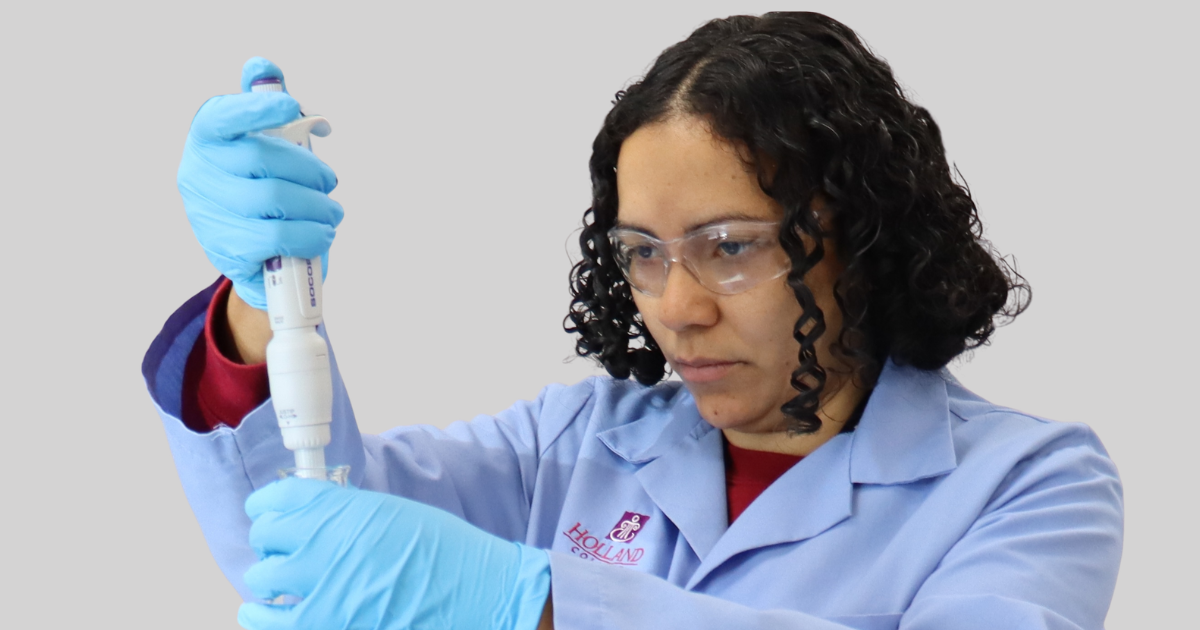
Shanda Solis Chavez realized her work could extend beyond a bioscience laboratory.
The lab assistant for the bioscience technology and seasonal instructor at Holland College had been advocating for growth since she arrived at the college in August 2015, through her mentor-student and colleague interactions.
“I have always looked for ways to make space more accessible and promote challenging conversations,” she said.
For Chavez, her recent work with the diversity and inclusion board was a milestone.
“I have always looked for ways to make space more accessible and promote challenging conversations.”
Cultural transition
She was born in Nicaragua, the largest country in Central America, and studied in Taiwan.
While growing up, she was influenced by collectivist values, a culture that values the importance of community, selflessness and team harmony.
When she arrived in Canada back in February 2014, transitioning into an individualistic cultural workplace was an adjustment
She said the challenge wasn't just about learning new protocols, but about acknowledging and reconciling two different ways of being and working.
It required resilience to remain true to her roots while navigating a new professional landscape, she said.
“Having to navigate the invisible hurdles, battling impostor syndrome… being a woman of colour and an immigrant, there is the constant need to prove myself and work twice as hard.”
A vision of a better future for her children helped her move forward despite the cultural challenges.
“As a mother of children of colour, I am deeply motivated to ensure they go through a world and an educational system, where they don't have to face the same barriers or hurdles that I have.”
She also stayed connected through her students and her lifelong commitment to creating a more inclusive space for them.
Difference of inclusion and belonging
A professor once told her an analogy for the meaning of belonging and inclusion.
“Inclusion is being invited to a party, while belonging is being invited to the dance floor and not being afraid to dance.”
This sense of belonging requires the realization that cross-cultural training isn't just for international students or minority staff, it is for the entire institution, she said.
“True belonging happens when the majority culture works just as hard to understand different perspectives as we do to adapt,” she said. “I want my children to grow up in a community where their heritage is understood as a strength, not a puzzle to be solved.”
Being herself in the college community
 She felt complete whenever she saw her students succeed, especially the international and minority students.
She said even though she completed her studies in Taiwan, students recognize a shared journey: moving across cultures to pursue a dream.
“I feel most like myself when I can be a bridge to others, ensuring that students and fellow minorities feel seen, heard, and supported in a way that I had to advocate for myself.”
People of colour and Immigrants are stakeholders, she said; diverse backgrounds bring essential global perspectives to the table.
“I want to inspire others to be vocal, know how good they are, that their unique ideas and different perspectives can and should be valued; you don't need a formal title to be an advocate for your community and for the future of those who will follow you.”
Advice for present and future post-secondary students
Find a community and seek out mentors who share a cultural lens, and don’t just learn the "what”; try to understand and question the “why,” she said.
“Don’t be afraid to share how your background might offer a different way of solving a problem,” she said. “Curiosity and uniqueness turn a student from a passive observer into a leader.”
Cross-cultural competency is a two-way street, she said; the burden of adapting cannot be placed on the shoulders of those coming from different backgrounds.
We are a globalized society, not a societal island, she added.
“For the college to truly excel, the entire community, including our leaders, staff and students must be willing to learn, unlearn, and grow together to create true belonging.”
Her journey was about leveraging her global experience and perspectives to personally thrive and contribute to improving her surroundings, never forgetting where she came from and clearly outlining where she wants to go.
“Be willing to learn and unlearn and don’t be afraid to be a voice for change.”
Written by Dean Ramos
Journalism & Communications, Class of 2026.
This story is part of the Voices Project, a collaborative initiative between the Holland College Office of Culture and Inclusion and Holland College's Journalism and Communications Program. Additional stories from The Voices Project can be found on The Surveyor's Substack, which will return in October.
School of Visual Arts and Journalism GeneralRelated Blog Posts
Voices: Catherine Duré- Don’t Give up Even if it Feels Uncertain
August 17, 2026
Voices: Cameron Cassidy - Career Shifts Shape Path to Pride PEI Role
July 13, 2026